How to Remove Super Glue from Kitchen Counter: Quick Tips
Super glue can be a lifesaver for quick fixes, but when it ends up on your kitchen counter, it can feel like a disaster. You might be worried about damaging your beautiful countertop or leaving sticky residue that never seems to go away.
But don’t worry—there’s hope! Imagine being able to restore your kitchen counter to its original pristine condition without stress or frustration. This guide will show you step-by-step how to remove super glue from your kitchen counter safely and effectively. You’ll discover simple tips and tricks that can save you time and hassle.
Ready to tackle that stubborn glue spot? Let’s dive in and bring back the shine to your kitchen space.
Materials Needed
Gather acetone, cotton balls, a plastic scraper, and warm soapy water. These tools help remove super glue effectively.
Removing super glue from your kitchen counter can be a daunting task, but with the right materials, the job becomes much easier. Whether you’ve had an accidental spill during a crafting session or a DIY project gone awry, knowing what you need is half the battle. Let’s explore the essential items that will help you tackle this sticky situation effectively.
Household Acetone
Acetone, commonly found in nail polish remover, is your best friend in dissolving super glue. It’s effective and readily available in most homes. Make sure it’s pure acetone for the best results.
Cotton Balls Or Swabs
Cotton balls or swabs are perfect for applying acetone precisely to the glued area. They allow you to control the amount and avoid damaging surrounding surfaces.
Plastic Scraper
A plastic scraper is ideal for gently lifting the softened glue without scratching your countertop. Avoid metal tools as they can easily damage the surface.
Warm Soapy Water
After using acetone, warm soapy water helps clean the residue and restore the countertop’s shine. It also neutralizes any remaining acetone.
Soft Cloth
Use a soft cloth to dry the area and polish the surface. A microfiber cloth works wonders in bringing back the original look of your counter.
Baking Soda (optional)
Baking soda can be mixed with water to form a paste that helps scrub off stubborn glue spots. It’s gentle yet effective on delicate surfaces.
Vinegar (optional)
White vinegar acts as a mild adhesive remover and can be used for a final clean. It’s a natural alternative for those who prefer eco-friendly solutions. Do you have all these materials handy? Ensuring you have these items before starting will save you from unnecessary trips to the store and make the glue removal process smoother.
Safety Precautions
Wear gloves to protect your skin from chemicals. Ensure the room is well-ventilated to avoid inhaling fumes.
Removing super glue from a kitchen counter can be tricky. Safety should be your top priority during the process. Super glue contains chemicals that can be harmful if not handled properly. Always use protective gear and work in a well-ventilated space. This will ensure you stay safe while tackling the sticky situation. Let’s dive into the necessary safety precautions.
Wear Protective Gloves
Use gloves to protect your skin from direct contact. Super glue can stick quickly to your fingers. Gloves act as a barrier, keeping your skin safe. Choose gloves made of latex or nitrile for best protection.
Ensure Proper Ventilation
Good airflow reduces inhalation risks. Open windows or doors to let fresh air circulate. This helps disperse any fumes from the glue or cleaning agents.
Avoid Direct Contact With Eyes
Super glue fumes and spills are dangerous for eyes. Keep your hands away from your face while working. If glue splashes into your eyes, rinse them immediately with water.
Read Product Labels Carefully
Understand the cleaning products you plan to use. Some chemicals react with super glue and can be hazardous. Follow the instructions provided on the labels.
Keep Children And Pets Away
Ensure the area is clear of kids and animals. They may accidentally touch or ingest harmful substances. Safety first! By following these precautions, you can safely remove super glue from your kitchen counter.
Initial Steps
Removing super glue from your kitchen counter can be a challenging task. Following the right initial steps can prevent damage and make the process easier. Start by assessing the situation carefully. Take a moment to gather necessary supplies. This will ensure you have everything handy before tackling the sticky situation.
Scraping Excess Glue
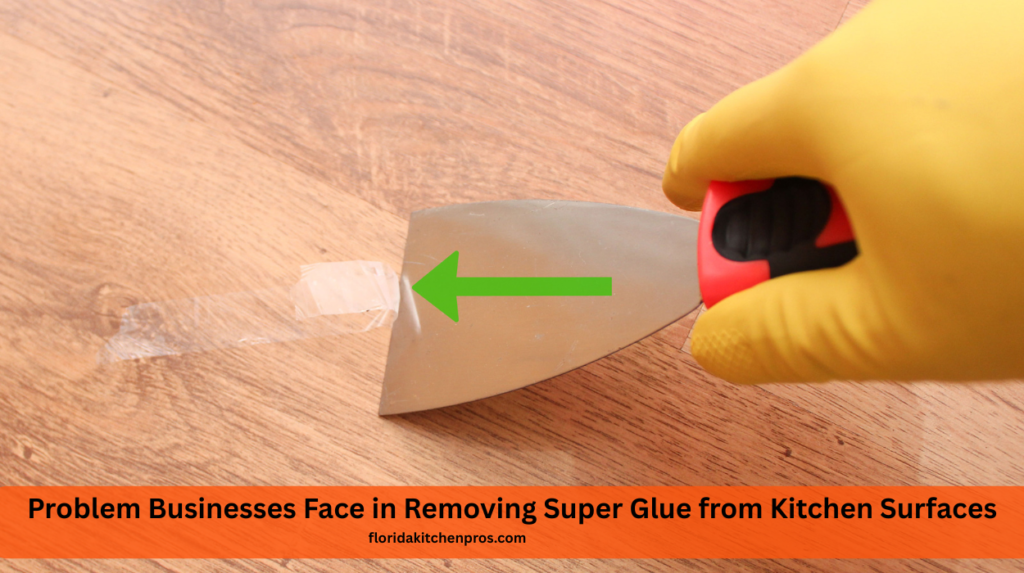
Begin by gently scraping off any excess glue. Use a plastic scraper to avoid scratches. Work slowly to prevent spreading the glue further. If the glue is thick, apply slight pressure. This helps in removing the bulk without causing harm. Always keep the scraper at a shallow angle. This minimizes the risk of damaging the counter.
Testing A Small Area
Before using any cleaning solution, test a small area. Choose a hidden spot on the counter. Apply a small amount of the cleaner. Wait a few minutes to observe any reaction. This ensures the solution won’t harm the surface. If no damage occurs, proceed confidently. Testing avoids unpleasant surprises later.
Credit: pbphomerepair.com
Using Acetone
Applying acetone helps dissolve super glue on kitchen counters. Gently rub the area with a cotton ball soaked in acetone. Wipe clean with a damp cloth to remove any residue.
Removing super glue from your kitchen counter might feel like a daunting task. But with the right approach, you can tackle it with ease. One effective method involves using acetone. Acetone is a common ingredient found in many nail polish removers and is renowned for its ability to break down super glue. Before you begin, ensure your kitchen is well-ventilated. Acetone has a strong smell, and you don’t want it lingering in your home. Remember to test a small, inconspicuous area of your counter first. This ensures that the acetone doesn’t damage the surface.
Applying Acetone
To start, you’ll need a bottle of acetone or acetone-based nail polish remover. Pour a small amount of acetone onto a cotton ball or soft cloth. Avoid soaking it too much to prevent spills or drips. Gently dab the acetone-soaked cotton ball onto the glue spot. Allow it to sit for a few minutes. This will soften the glue and make it easier to remove.
Rubbing With A Cloth
Once the glue begins to soften, take a clean cloth and gently rub the area. Use small, circular motions to break the glue’s bond with the counter. You may need to apply a bit more acetone if the glue proves stubborn. As you rub, you’ll notice the glue gradually lifting off the surface. Be patient—rushing can lead to scratches. After removing the glue, wash the area with warm, soapy water to remove any acetone residue. Have you ever tried this method before? Did you find it effective, or do you have another trick up your sleeve? Share your thoughts in the comments!
Alternative Methods
Try using warm soapy water to soften the glue. Gently scrape with a plastic card. For stubborn spots, apply vinegar or lemon juice, then wipe clean.
Removing super glue from your kitchen counter can be a daunting task, especially when you’re worried about damaging the surface. But don’t worry, there are alternative methods using everyday household items that can come to your rescue. These methods are simple, cost-effective, and gentle on your counters. Who knew that the solution to your sticky problem might already be sitting in your pantry?
Baking Soda And Vinegar
Baking soda and vinegar make a powerful combination for many cleaning tasks, including super glue removal. – Mix a small amount of baking soda with just enough vinegar to form a thick paste. – Apply the paste directly onto the super glue stain, ensuring it covers the area completely. – Let it sit for about 10-15 minutes. You’ll notice a fizzing reaction, which helps to break down the glue. – Gently scrub the area using a soft cloth or sponge. The abrasive nature of the baking soda can help lift the glue without scratching your counter. Have you tried this before with other stains? It’s amazing how versatile these two ingredients can be. Plus, they’re non-toxic, making them safe for use around food prep areas.
Lemon Juice Application
Lemon juice is another effective and natural option for removing super glue. The acidity in lemon juice can help dissolve the glue, making it easier to remove. – Soak a small cloth or cotton ball in fresh lemon juice. – Place it on the glue stain and leave it for about 10 minutes. This gives the acid time to work its magic. – Wipe away the glue with a clean cloth. For stubborn spots, you can gently rub the area with the lemon-soaked cloth. Do you have a lemon tree in your backyard or a few lemons in your fridge? This method not only cleans but also leaves a refreshing citrus scent in your kitchen. It’s a double win! By using these alternative methods, you can save time, money, and avoid harsh chemicals. Which method are you going to try first?
Credit: floridakitchenpros.com
Cleaning Residue
Removing super glue from kitchen counters can be tricky. Begin by applying acetone or nail polish remover to soften the glue. Gently scrape with a plastic spatula to avoid scratches.
Removing super glue from your kitchen counter can be tricky. Once the glue is gone, cleaning the residue is essential. This ensures your counter is spotless and safe for food prep. Let’s explore effective methods to tackle this task.
Soap And Water
Start by gathering mild dish soap and warm water. Mix a few drops of soap in a small bowl of warm water. Dip a soft cloth into the soapy water mixture. Gently rub the area with the glue residue. Move in circular motions to lift the leftover glue. Rinse the cloth with clean water. Wipe the area again to remove soap traces. This step helps loosen any remaining residue.
Drying The Surface
After cleaning, it’s important to dry the surface well. Use a clean, dry cloth to wipe the counter. Ensure no moisture remains. This prevents water spots and keeps your counter shiny. Drying also avoids slipping hazards. It prepares your counter for its usual use.
Preventing Future Incidents
Prevent future incidents by storing super glue in a safe place. Use protective mats on counters during projects. Consider wearing gloves to avoid direct contact with glue.
Preventing future incidents with super glue spills is crucial in maintaining your kitchen’s appearance. A few mindful practices can help keep your counters free from sticky mishaps. Regularly adopting these habits ensures your surfaces stay pristine.
Store Super Glue Properly
Keep super glue in a secure, upright position. Ensure the lid is tightly closed after use. Place it in a designated area away from high-traffic spots. This prevents accidental knocks and spills.
Use Protective Mats
Lay down protective mats when working with super glue. These mats shield your counter from drips and drops. Choose mats that are easy to clean for convenience.
Educate Family Members
Explain proper handling techniques to everyone in the household. Share the importance of keeping glue away from counters. Encourage careful usage to prevent accidents.
Keep Counters Clutter-free
Maintain a tidy counter space. Clear unnecessary items before using super glue. A clutter-free surface reduces the risk of accidental glue spills.
Check Expiration Dates
Examine glue containers for expiration dates regularly. Old glue may leak or become difficult to handle. Replace expired products to avoid sticky situations.

Credit: pbphomerepair.com
Frequently Asked Questions
What Dissolves Dried Super Glue?
Acetone effectively dissolves dried super glue. Apply it using a cotton swab or cloth for removal. Avoid skin contact and ensure proper ventilation. Use nail polish remover containing acetone as an alternative. Test on a small area first to prevent damage to surfaces.
Does Vinegar Dissolve Superglue?
Vinegar can help dissolve superglue. It contains acetic acid that breaks down the glue’s bond. Soak the glued area with vinegar and gently rub to remove the glue. Always test on a small spot to avoid damage.
Does Wd-40 Remove Super Glue?
WD-40 can help loosen super glue. Spray on the affected area, let it sit for a few minutes, then gently rub. Always test on a small surface first.
How To Get Dried Super Glue Off Countertop Reddit?
Use acetone or nail polish remover on a cotton ball. Gently rub the glue until it dissolves. Clean with warm soapy water. Dry the area with a soft cloth. Always test on a small area first to ensure it won’t damage the countertop.
Conclusion
Removing super glue from kitchen counters is simpler than you think. Begin with acetone, your go-to solution for sticky mishaps. Gently dab the glue spot with a soaked cloth. Patience is key. Scrape softly with a plastic tool. Rinse and repeat if needed.
Always test a small area first. Prevent future spills by storing glue safely. Regular cleaning helps maintain your counter’s charm. With these steps, your kitchen surface will stay spotless. No need for stress, just a little care and attention. Enjoy a clean, glue-free kitchen!