
Are you tired of standing over your double kitchen sink, watching the water slowly rise instead of swiftly draining away? A clogged sink can be a frustrating roadblock in your daily routine, especially when you have dishes to wash and meals to prepare.
But don’t worry; you’re not alone, and there is hope. Imagine the relief you’ll feel when your sink drains smoothly once more, restoring order to your kitchen. We’ll guide you through the simple steps to unclog your double kitchen sink, using tools you likely already have at home.
By the end, you’ll have the know-how to tackle this common kitchen conundrum with confidence. Ready to dive in? Let’s clear that clog together!
Common Causes Of Clogs
Clogged kitchen sinks are frustrating. They disrupt daily chores and cause inconvenience. Understanding the common causes of clogs can help prevent them. Awareness is key to maintaining a smooth running kitchen.
Food Particles
Food particles are a frequent cause of clogs. Small bits of food often slip past the strainer. Over time, these bits accumulate in the pipes. This buildup blocks water flow and leads to clogs. Regular cleaning can help prevent this issue.
Grease Buildup
Grease is a silent culprit in sink clogs. It cools and solidifies in pipes. This creates a sticky barrier for other debris. A little grease down the drain can cause big problems. Use hot water to help dissolve grease and keep pipes clear.
Foreign Objects
Sometimes, foreign objects find their way into the sink. Items like bottle caps or utensils can slip unnoticed. These objects block pipes, creating serious blockages. Always check your sink for small items before running water.
Essential Tools And Materials
Unclogging a double kitchen sink can seem daunting without the right tools. Having essential tools and materials ready can make the task easier. Using these specific tools will help effectively clear the blockage. Let’s explore some essential tools needed for this task.
Plunger
A plunger is vital for unclogging sinks. It uses suction to dislodge the clog. Choose a plunger with a flat cup design. This type creates a tight seal over the sink drain. Ensure the sink has enough water to cover the plunger cup. This helps in creating effective suction. Place the plunger over the drain and press down firmly. Pull up quickly to create suction. Repeat several times to loosen the blockage.
Plumbing Snake
A plumbing snake is useful for stubborn clogs. It is a flexible tool that can reach deep blockages. Insert the snake into the drain and rotate it. As it twists, it breaks up the clog. Continue pushing and rotating until the drain clears. Retrieve the snake slowly to avoid damage. This tool is essential for tough, unreachable clogs.
Baking Soda And Vinegar
Baking soda and vinegar offer a natural solution. They create a fizzing reaction that breaks down clogs. Pour half a cup of baking soda down the drain. Follow with half a cup of vinegar. Let the mixture sit for 15 minutes. This allows the reaction to dissolve the blockage. Flush with hot water to clear the residue. This method is safe and environmentally friendly.
Initial Preparations
Gather necessary tools like plunger, baking soda, and vinegar. Ensure both sink basins are empty and dry. Prepare for possible water splashes during unclogging.
Unclogging a double kitchen sink might seem daunting, but with the right preparation, you can tackle the task efficiently. Before diving in, setting the stage for success is crucial. Initial preparations ensure you’re not caught off guard and can handle the job safely and effectively.Clear The Sink Area
Start by removing any dishes, utensils, or items from the sink. Ensure the surrounding countertop is also free of clutter. This not only gives you more space to work but prevents accidental damage to your kitchenware. Next, clean any visible debris or food particles from the sink basin. Use a damp cloth or sponge to wipe down the surface. This step helps you assess the blockage and ensures nothing obstructs your work.Wear Protective Gear
Safety should be your top priority. Wear rubber gloves to protect your hands from dirty water and cleaning chemicals. Consider using goggles if you’re dealing with harsh cleaning agents. Old clothes are advisable, as unclogging a sink can get messy. Keep a towel or paper towels nearby to quickly clean up any spills. This way, you’re prepared for any surprises and can focus on the task at hand. Have you ever found yourself elbow-deep in murky water, wishing you had prepared better? These simple steps can save you from that predicament. Are you ready to take on the challenge with confidence?Using A Plunger
Using a plunger is a simple way to clear a double kitchen sink. This common household tool can effectively remove blockages. Follow these steps to ensure success and keep your sink flowing smoothly.
Seal The Opposite Drain
Begin by sealing the drain on the opposite side of the sink. Use a damp cloth or stopper to cover it completely. This prevents air from escaping when you plunge. A tight seal is crucial for building enough pressure.
Apply Plunging Technique
Place the plunger cup over the clogged drain. Ensure it covers the drain entirely to create a vacuum seal. Push down firmly, then pull up with force. Repeat the motion vigorously several times. The pressure can dislodge debris and clear the clog.
Check the drainage after plunging. Run water to test if the blockage is gone. If the sink still drains slowly, repeat the plunging process. Persistence can often resolve stubborn clogs.
Applying Baking Soda And Vinegar
Applying a mixture of baking soda and vinegar can effectively unclog a double kitchen sink. Pour half a cup of baking soda followed by one cup of vinegar into the drain. Allow the fizzing solution to sit for 15 minutes, then rinse with hot water to clear the blockage.
Applying baking soda and vinegar is an effective and eco-friendly method for unclogging a double kitchen sink. This dynamic duo works wonders due to the chemical reaction between the two ingredients, which helps break down stubborn clogs. Plus, it’s something you can easily do with common household items.Create The Mixture
Start by collecting your supplies: baking soda, vinegar, and a measuring cup. Ensure the sink is dry before you begin. Pour half a cup of baking soda down the drain followed by an equal amount of vinegar. The moment these two meet, you’ll notice fizzing and bubbling. This reaction is not just fun to watch, it’s the powerhouse that will tackle the clog. Do you remember the excitement of a school science project? It’s the same, but with a practical outcome in your kitchen!Pour And Wait
After pouring the mixture, cover the drain with a plug or a damp cloth. This ensures the reaction happens primarily within the pipes, boosting its effectiveness. Allow the mixture to sit for at least 15 minutes. Patience is key here. This waiting period is where the magic happens, as the bubbling action works its way through the gunk and debris clogging your pipes. After the wait, flush the drain with boiling water. Pour it slowly to enhance the clearing process. If your sink still drains slowly, repeat the process once more. You’ll be amazed at how this simple solution can bring your sink back to life without harsh chemicals.
Credit: www.angi.com
Deploying A Plumbing Snake
Deploying a plumbing snake effectively can clear clogs in a double kitchen sink. Insert the snake into the drain and rotate to break up blockages. Gradually feed the snake further until the clog clears, ensuring water flows smoothly again.
Deploying a plumbing snake is a practical and effective solution for unclogging a double kitchen sink. This tool is ideal for dealing with stubborn blockages that typical methods can’t handle. If you’ve ever faced the frustration of standing water refusing to drain, you’re not alone. A plumbing snake can be your secret weapon, saving you from costly plumber visits.Insert The Snake
Begin by inserting the snake into the drain. Ensure you remove any visible debris first to prevent unnecessary complications. The snake should be carefully fed into the drain until you feel resistance. This indicates you’ve reached the clog. A tip from personal experience: patience is key. Rushing may cause damage or push the blockage further down. Take your time to let the snake navigate through the pipe bends.Rotate And Retrieve
Once the snake hits the blockage, rotate the handle. This motion helps break up and latch onto the debris. You’ll feel the resistance change as the clog starts to loosen. When you begin retrieving the snake, do it slowly. If you pull too fast, you might leave part of the blockage behind. Extract the snake steadily and check what it brings up. It’s not uncommon to pull up unexpected items—a reminder of how essential regular sink maintenance is. Are you ready to tackle the challenge yourself? With the right techniques, you’ll master the art of unclogging without the need for professional help.Cleaning The P-trap
Cleaning the P-trap is often the magic trick that restores your kitchen sink’s flow. This U-shaped pipe, located beneath your sink, is notorious for collecting debris like food particles, grease, and soap scum. You might be surprised at how much gunk can accumulate there over time! Tackling this task might seem daunting at first, but with a little guidance, you’ll have your sink draining like new. Ready to roll up your sleeves?
Locate And Remove The P-trap
Finding the P-trap is your first mission. It’s typically right under your sink, connecting the drain to the wall pipe. Look for a curved pipe; that’s your target. Once located, place a bucket underneath to catch any water or debris. Unscrew the slip nuts on both ends of the P-trap using your hands or a wrench. If it’s stubborn, a bit of muscle might be needed.
Once you’ve loosened the nuts, gently pull the P-trap away from the pipes. Be prepared for water and some other surprises to spill out. Ever wondered why your sink smells funky? A peek inside the trap might reveal the culprits.
Clean And Reassemble
With the P-trap in hand, it’s cleaning time. Rinse it under warm water to remove the loose debris. For stubborn clogs, use a toothbrush or a bottle brush. A mixture of baking soda and vinegar can help dislodge tough grime if needed. It’s amazing how a simple cleaning can make such a difference!
Once clean, it’s time to put it back together. Reattach the P-trap by aligning it with the pipes and tightening the slip nuts securely. Ensure everything is snug and leak-proof. Turn on the faucet and check for leaks. Isn’t it satisfying to see water flowing smoothly again?
Cleaning the P-trap is a straightforward task that can solve many drainage issues. Have you tackled a P-trap cleaning before? Share your experience, or maybe your favorite cleaning hack in the comments!

Credit: www.youtube.com
Preventive Measures
Use a plunger to dislodge blockages in a double kitchen sink. Pour a mixture of baking soda and vinegar down the drain to break up debris. Rinse thoroughly with hot water to clear remaining particles.
Preventing clogs in your double kitchen sink is much easier than dealing with a blockage. By adopting some simple preventive measures, you can save yourself time and frustration. Let’s dive into some practical strategies to keep your sink flowing smoothly.Regular Maintenance
Regular maintenance is key to keeping your double kitchen sink in top shape. Schedule a monthly routine of pouring hot water down the drain to help dissolve any greasy build-up. You might be surprised how this simple act can prevent stubborn clogs from forming. Consider using a mixture of baking soda and vinegar as a natural cleaning agent. This combination can break down residues effectively. It’s a chemical-free way to maintain your sink’s health and avoid future headaches.Mindful Disposal Practices
How often do you think about what goes down your sink? Being mindful of disposal practices is crucial. Avoid pouring grease or oil down the drain as it can solidify and cause blockages. Use a strainer to catch food particles before they go down the drain. This small tool can prevent large debris from causing clogs. Consider starting a compost pile for organic waste. Not only is it environmentally friendly, but it also reduces the amount of waste going into your pipes. By implementing these preventive measures, you can enjoy a hassle-free kitchen sink. What steps will you take to ensure your sink remains clog-free?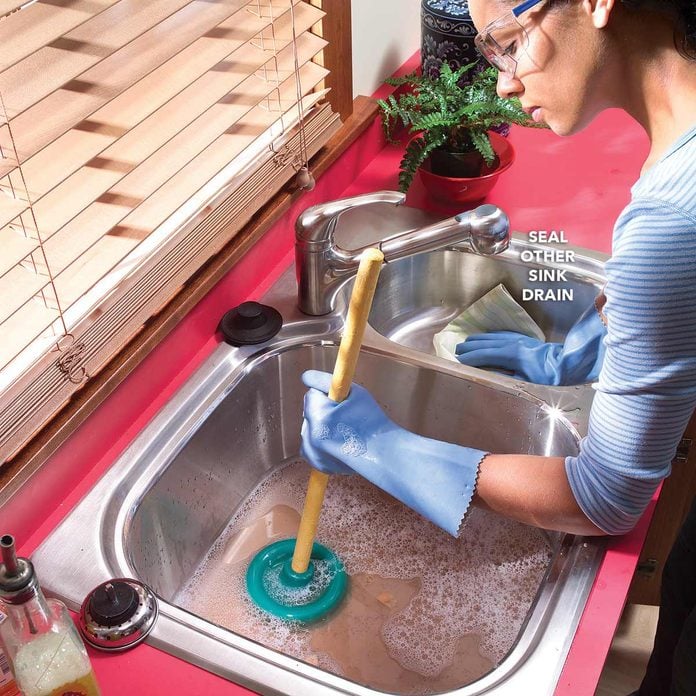
Credit: www.familyhandyman.com
Frequently Asked Questions
How Do You Unclog A Double Kitchen Sink?
To unclog a double kitchen sink, start by removing any visible debris. Use a plunger on both sides of the sink to create suction. If that doesn’t work, try a drain snake or use a baking soda and vinegar solution.
Flush with hot water to clear remaining blockages.
Can Baking Soda Unclog A Kitchen Sink?
Yes, baking soda can help unclog a kitchen sink. Pour half a cup of baking soda down the drain, followed by half a cup of vinegar. Let it sit for 15 minutes, then rinse with hot water. This combination helps break down blockages and freshen the drain.
What Tools Unclog Kitchen Sinks?
Common tools to unclog kitchen sinks include plungers and drain snakes. Plungers create suction to dislodge blockages. Drain snakes reach deeper clogs and remove debris. Additionally, chemical drain cleaners can be used, but they should be a last resort due to potential pipe damage.
How Often Should I Clean My Kitchen Sink Pipes?
Clean your kitchen sink pipes every month to prevent clogs. Regular maintenance helps remove food particles and grease buildup. Use a mixture of baking soda and vinegar or hot water. Regular cleaning keeps drains clear and reduces the risk of unpleasant odors.
Conclusion
Unclogging a double kitchen sink can seem tricky, but it’s manageable. Start by removing any visible debris. A plunger can clear minor blockages. Use boiling water to dissolve greasy clogs. For stubborn clogs, a baking soda and vinegar mix works well.
If these steps don’t work, consider using a plumber’s snake. Regular maintenance helps prevent future clogs. Always be cautious with chemical drain cleaners; they can damage pipes. By following these steps, you can keep your kitchen sink flowing smoothly. Remember, patience and persistence are key.
You can handle this with ease!