What Angle to Sharpen Kitchen Knife: Expert Tips
Executive Chef & Lead Commercial Kitchen Specialist at Daily Kitchup Test Lab
Are you tired of struggling with dull kitchen knives that make meal prep a chore? Imagine slicing through vegetables and meats with ease, making your cooking experience smoother and more enjoyable.
The secret lies in sharpening your knife at the right angle. But what angle should you use? This is a common question that can make a big difference in your kitchen. Understanding the best angle to sharpen your kitchen knife not only keeps your blades in top shape but also extends their lifespan and enhances your culinary skills.
We’ll guide you through the ideal sharpening angle and why it matters, helping you to master the art of knife sharpening. Keep reading, and discover how a simple adjustment can transform your kitchen routine.
Ideal Knife Sharpening Angle
Sharpen kitchen knives at a 15 to 20-degree angle for optimal cutting performance. This angle ensures a sharp edge without compromising durability. Precision in sharpening enhances efficiency and safety in meal preparation.
The ideal knife sharpening angle is crucial for maintaining a knife’s performance. Choosing the correct angle ensures your knife stays sharp and effective for cutting. Different knives require different angles based on their design and intended use.Understanding Knife Angles
The angle at which you sharpen your knife influences its cutting ability. A smaller angle creates a sharper edge but may wear down faster. A larger angle offers durability but might not be as sharp. Striking the right balance is key. Kitchen knives often have sharpening angles between 15 to 20 degrees. Japanese knives usually have a smaller angle, around 15 degrees. This gives them a razor-sharp edge suitable for precise cutting tasks. Western knives often favor a 20-degree angle, providing a durable edge suitable for heavier tasks.Choosing The Right Angle
Consider the knife’s purpose when selecting a sharpening angle. For slicing vegetables, a sharper angle is ideal. For chopping through tougher materials, choose a larger angle. This ensures the knife remains effective without frequent sharpening.Sharpening Techniques
Use consistent strokes while sharpening to maintain the desired angle. Whether using a whetstone or a sharpening tool, keep the angle steady. This consistency ensures the edge remains uniform and sharp.Maintaining Knife Sharpness
Regular sharpening is essential to keep knives in optimal condition. Following the right angle during sharpening enhances longevity and performance. This practice helps avoid dullness and ensures smooth cutting every time.Importance Of The Correct Angle
Choosing the right angle is crucial for sharpening kitchen knives. A precise angle ensures a sharp edge and safe cutting. Generally, a 15-20 degree angle works best for most kitchen knives, balancing sharpness and durability effectively.
The angle at which you sharpen your kitchen knife is crucial. It affects the knife’s performance and longevity. Using the correct angle ensures your knife cuts efficiently and safely. This precision can elevate your cooking experience.Understanding Knife Angles
Knife angles typically range between 15 to 20 degrees. A smaller angle makes the blade sharper but more delicate. A wider angle provides durability for the blade. Choosing the right angle depends on the knife’s purpose.Impact On Performance
The correct angle enhances cutting efficiency. It reduces the effort needed to slice through food. A well-sharpened knife at the right angle glides through ingredients. This precision leads to cleaner cuts and better presentation.Safety Considerations
A knife sharpened at the wrong angle can slip. This increases the risk of accidents. Maintaining the correct angle ensures control during use. It helps prevent injuries in the kitchen.Maintaining Sharpness
Sharpening at the right angle retains sharpness longer. It reduces the frequency of re-sharpening. This prolongs the life of your knife. Proper maintenance saves time and effort in the long run.Common Sharpening Angles
Sharpening your kitchen knife can seem like a daunting task, especially when faced with the choice of angles. Understanding these angles is crucial, as the right one can make all the difference in your cooking experience. Let’s delve into the common sharpening angles that can transform your culinary tools into precision instruments.
15-degree Angle
A 15-degree angle is often used for professional-grade knives. It offers a razor-sharp edge that is perfect for slicing and dicing with ease. Imagine effortlessly slicing through a ripe tomato without squashing it. This angle is typically seen in Japanese-style knives, where precision is key. However, while it provides sharpness, it may require more frequent sharpening due to the thinness of the blade.
20-degree Angle
The 20-degree angle is a versatile choice, balancing sharpness with durability. Most Western-style kitchen knives are sharpened at this angle. It offers a robust edge capable of handling a variety of tasks—from chopping vegetables to carving meat. This angle is less fragile, allowing you to enjoy a sharp blade with less maintenance. When was the last time your knife felt like a true extension of your hand?
25-degree Angle
Opting for a 25-degree angle is ideal for heavier duty work. This angle provides a stronger edge, perfect for cutting through tougher ingredients. Picture yourself effortlessly cutting through a thick slab of meat or chopping through hard root vegetables. While it may not be as sharp as a lower angle, the durability is unmatched. Have you ever struggled with a dull knife during dinner prep? This angle might be your answer.
Choosing the right angle for sharpening your kitchen knife is a balance between sharpness and durability. Consider your cooking style and the tasks at hand. What angle will make your kitchen experience more seamless and enjoyable?
Credit: www.tiktok.com
Factors Influencing Angle Choice
Choosing the right angle for sharpening a kitchen knife is essential. The angle affects the knife’s performance and durability. Several factors influence this choice, ensuring your knife serves its purpose well.
Type Of Knife
Different knives require different sharpening angles. A chef’s knife might need a 20-degree angle. A delicate paring knife may need a finer 15-degree angle. The type of knife dictates the best angle for sharpening.
Usage Frequency
How often you use the knife impacts the angle choice. A frequently used knife might need a sturdier edge. Less frequent use allows for a sharper, finer angle. Consider how often you use the knife when choosing an angle.
Cutting Purpose
The cutting task influences the sharpening angle. Chopping vegetables requires a different angle than slicing meat. A sharper angle suits fine cuts. A broader angle is better for heavy-duty tasks. Match the angle with the cutting purpose for best results.
Tools For Angle Accuracy
Sharpening kitchen knives requires precision in maintaining the correct angle. The right tools ensure that your knife blades are consistently sharp and effective. Choosing the right tool depends on your skills and preferences. Let’s explore some options for achieving angle accuracy.
Manual Sharpeners
Manual sharpeners are simple and effective. They often come with preset angles. This feature makes it easy for beginners to use. You just need to slide the blade through the slots. These tools are compact and affordable. They work well for quick touch-ups and maintaining an edge.
Electric Sharpeners
Electric sharpeners offer speed and convenience. They have built-in angle guides for precision. These devices are ideal for those short on time. Electric sharpeners require minimal effort. They can quickly restore a dull blade to sharpness. Their multiple stages offer different levels of sharpening.
Whetstones
Whetstones provide the most control over sharpening angles. They require a bit of practice to master. You manually adjust the angle based on the blade’s needs. Whetstones come in various grits for different sharpening stages. They are versatile and offer a traditional sharpening experience.
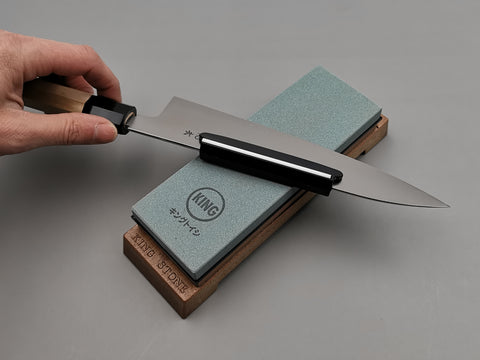
Credit: cuttingedgeknives.co.uk
Techniques For Maintaining Angle
Maintaining the correct angle while sharpening a kitchen knife is essential. It ensures the knife remains efficient and safe to use. There are several techniques that can help you keep a consistent angle during sharpening. These techniques will not only improve your sharpening skills but also prolong the life of your knives.
Consistent Hand Movement
Consistency in hand movement is key for accurate sharpening. Move your hand smoothly across the stone. Use steady pressure throughout the motion. This helps maintain the angle. Practice will make it easier to keep the same angle every time.
Angle Guides
Angle guides are useful tools for beginners. They attach to the knife and help maintain the angle. Guides ensure the knife stays at the right angle during sharpening. They are affordable and easy to use. Choose a guide that fits your knife type and preferred angle.
Visual Cues
Visual cues can assist in maintaining the sharpening angle. Mark the edge with a marker. This helps you see where you’re sharpening. Adjust your angle based on the marks left behind. This technique provides immediate feedback. It helps you correct any mistakes quickly.
Common Mistakes To Avoid
Sharpening kitchen knives requires precision and care. Many make common mistakes that can lead to poor results. Understanding these errors helps maintain a sharp edge and prolongs the knife’s life. Let’s explore these pitfalls.
Inconsistent Angling
Maintaining a consistent angle is crucial. Many people change the angle while sharpening, leading to uneven edges. This reduces the knife’s effectiveness. Use a guide to keep the angle steady throughout the process.
Over Sharpening
Sharpening too much can damage the blade. Excessive sharpening wears down the knife and shortens its lifespan. Sharpen only when necessary, ensuring the blade remains durable.
Improper Tool Use
Using the wrong tools affects sharpening quality. Choose tools designed for kitchen knives. Incorrect tools can ruin the blade or make sharpening difficult. Familiarize yourself with the right equipment for the best results.
Expert Tips For Beginners
Sharpening kitchen knives at a 20-degree angle is ideal for most home cooks. This angle balances sharpness and durability. A consistent angle ensures even sharpening, enhancing cutting efficiency.
Learning to sharpen a kitchen knife can be intimidating. Beginners often struggle with finding the right angle. Using the right technique ensures your knives perform well. Here are some expert tips to help you get started.Starting With A 20-degree Angle
A 20-degree angle is ideal for most kitchen knives. It balances sharpness with durability. Use a protractor or angle guide to maintain this angle. Consistency is key to achieving a sharp edge.Practicing On Less Expensive Knives
Start with cheaper knives if you’re new to sharpening. Mistakes won’t be costly, and you’ll learn faster. Practice builds confidence and skill. Gradually, you’ll feel ready to sharpen your prized knives.Seeking Professional Guidance
Consider seeking advice from a professional. Many chefs and sharpening experts offer classes. You can learn valuable techniques and tips. Watching a pro can boost your understanding.
Credit: www.coolinastore.com
Frequently Asked Questions
Are Kitchen Knives 15 Or 20 Degrees?
Kitchen knives typically have a blade angle of either 15 or 20 degrees. Western knives usually feature a 20-degree angle, offering durability. Japanese knives often have a sharper 15-degree angle, providing precision. Choose based on your cutting needs and knife type for optimal performance.
What Is The Angle Of A Kitchenaid Knife?
Kitchenaid knives typically have a blade angle of 17 to 22 degrees. This angle provides precision and durability. It allows for efficient slicing and dicing in your kitchen tasks. Always maintain the angle during sharpening for optimal performance and longevity.
What Happens If You Sharpen A Knife At The Wrong Angle?
Sharpening a knife at the wrong angle can dull the blade and decrease cutting efficiency. It may cause uneven edges, leading to improper slicing and potential safety hazards. Consistent sharpening at the correct angle maintains blade integrity and ensures optimal performance.
Proper technique is crucial for effective sharpening results.
What Is The Ideal Angle For Kitchen Knives?
The ideal angle for kitchen knives typically ranges from 15 to 20 degrees. This angle ensures a balance between sharpness and durability. Japanese knives often use a 15-degree angle, while Western knives may favor a 20-degree angle for robustness.
Conclusion
Choosing the right angle for sharpening your kitchen knife is key. It affects how efficiently your knife cuts. Most kitchen knives work best at 15 to 20 degrees. This angle offers a good balance. Sharp enough for precise cuts. Durable enough to withstand regular use.
Remember to consider your knife’s purpose. A chef’s knife may need a different angle than a paring knife. Regular sharpening maintains performance. Invest time in learning the right technique. Your cooking experience improves. Your food preparation becomes easier. Happy cooking with sharper, more effective knives!

Similar Posts