Ever found yourself in the middle of a kitchen renovation, only to realize you’re unsure about the size of the sink you need? You’re not alone.
Choosing the right kitchen sink can be a daunting task, especially when you’re faced with a variety of options and sizes. Measuring a kitchen sink accurately is crucial, not just for aesthetics but for functionality. Imagine the frustration of a sink that’s too small for your pots or too large for your countertop space.
But don’t worry, we’ve got you covered. By understanding how to measure a kitchen sink properly, you can ensure a perfect fit that complements your kitchen’s design and meets your practical needs. Stick with us to learn the simple steps and expert tips that will save you time, money, and a lot of headaches. Let’s dive in and make your kitchen renovation a smooth and satisfying experience!
Types Of Kitchen Sinks
Choosing the right kitchen sink can transform your culinary space, but understanding the different types is key to making the best decision. Whether you’re renovating or building a new kitchen, the variety of sink options can be overwhelming. Let’s explore the popular types of kitchen sinks and how they can suit your needs and style.
Top-mount Sinks
Top-mount sinks, also known as drop-in sinks, are a classic choice for many kitchens. They are easy to install because they simply drop into a pre-cut hole in the countertop, with the rim resting on the surface. This design makes them versatile and budget-friendly, fitting seamlessly into most countertop materials.
Imagine upgrading your kitchen without a complicated installation process. The top-mount sink offers just that ease. Plus, they provide a neat look with a visible rim, making them ideal for those who appreciate a defined boundary between sink and counter.
Undermount Sinks
Undermount sinks offer a sleek, modern look by being installed beneath the countertop, creating a seamless transition. They are perfect for those who value easy cleaning, as there’s no rim to catch debris. This design is popular in contemporary kitchens, giving you a smooth surface.
While they might require professional installation, undermount sinks are a great choice if you’re aiming for a clutter-free countertop. Consider the joy of wiping crumbs directly into the sink without obstruction. It’s a small convenience that makes a big difference.
Farmhouse Sinks
Farmhouse sinks, or apron-front sinks, bring a rustic charm to any kitchen. With their deep basin and exposed front, these sinks are perfect for handling large pots and pans. They create a striking focal point, blending function with style effortlessly.
If you’re looking to make a statement, a farmhouse sink could be your answer. Imagine the delight of having more space to wash dishes or prep food, all while enhancing your kitchen’s aesthetic. They’re not just sinks; they’re conversation starters.
Double-bowl Sinks
Double-bowl sinks provide versatility with two separate basins. This design is ideal for multitasking, allowing you to wash dishes in one bowl while prepping food in the other. They cater to busy kitchens where efficiency is a priority.
Think about the convenience of separating tasks without compromising on space. If you often find yourself juggling multiple kitchen tasks, a double-bowl sink can be a game-changer. It’s a practical solution that helps streamline your kitchen workflow.

Credit: www.shopabunda.com
Essential Tools For Measurement
Accurate measurements are crucial when installing or replacing a kitchen sink. Without the right tools, you might end up with a sink that doesn’t fit properly, causing unnecessary headaches and expenses. Let’s explore the essential tools you need to ensure a perfect fit for your kitchen sink.
Measuring Tape
A measuring tape is indispensable for getting precise dimensions of your sink space. Opt for a flexible tape that allows you to measure curves and corners easily. Make sure to measure the width, depth, and length of the sink area to avoid surprises during installation.
Have you ever measured twice only to cut once? This tool embodies that principle, ensuring you get the exact measurements right the first time.
Level Tool
A level tool helps you ensure that your sink will sit perfectly flat. A tilted sink can cause water drainage issues and uneven wear. Place the level tool across the sink area horizontally and vertically to check for any slants.
Why leave it to guesswork? A level tool provides the assurance that your sink will be smooth and balanced.
Template Use
Templates are often provided by sink manufacturers and can be extremely helpful for accurate placement. Lay the template over your countertop to trace the cutout area. This method minimizes errors and ensures a snug fit.
Think of it as a dress rehearsal for your sink—giving you a preview of how it will look and fit.
Are you ready to measure your kitchen sink with precision? With these essential tools, you can approach your sink installation with confidence and accuracy.
Steps To Measure A Kitchen Sink
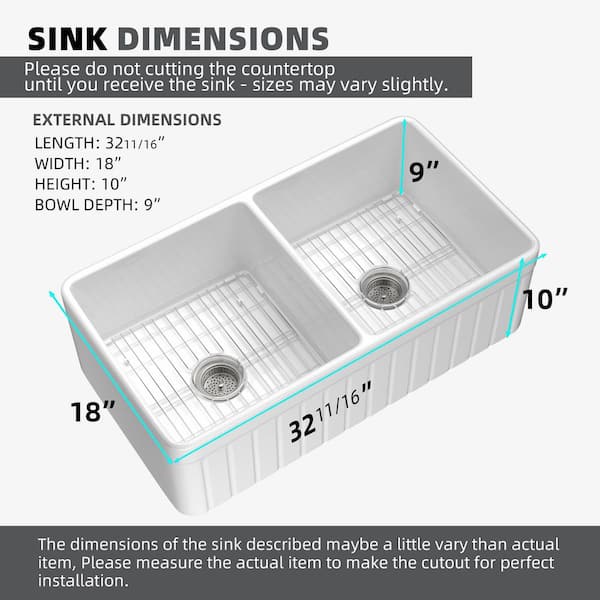
Begin by measuring the sink’s length from one edge to the opposite edge. Next, measure the width from front to back. For depth, check the distance from the bottom of the sink to the top rim. These measurements ensure the sink fits perfectly in your kitchen space.
Measuring a kitchen sink accurately can save you a lot of headaches during installation or replacement. Whether you’re upgrading or installing a new sink, understanding the dimensions is crucial to ensure it fits perfectly into your kitchen space. Let’s dive into the steps required to measure a kitchen sink effectively.Measure Sink Width
Start by measuring the width of your current sink. Use a tape measure to gauge the distance from one side to the other, across the widest point. This measurement helps you determine the maximum width of the sink that can fit into your countertop. Double-check your measurement to avoid any fitting issues later. Have you ever had to return a sink because it was too wide? This step ensures that doesn’t happen!Measure Sink Depth
Next, measure the depth of the sink, which is the distance from the top rim to the bottom basin. This measurement is essential for understanding how deep your sink will be, impacting both functionality and aesthetic. A deeper sink might be perfect for washing large pots, but could it make it harder to reach the faucet? Consider your daily kitchen tasks to find the ideal depth.Determine Sink Length
The length of the sink is the distance from front to back, or from the edge closest to you to the wall. Make sure to measure from the edge of the countertop to the wall for accuracy. This dimension is crucial for ensuring your sink aligns with your cabinets and isn’t too close to the backsplash. You wouldn’t want a sink that’s too long, causing you to bump into the wall every time you wash dishes.Consider Faucet And Accessories
Finally, take into account the space needed for faucets and accessories. Measure the area where the faucet will be installed, and decide whether you’ll need additional holes for accessories like soap dispensers or spray hoses. Do you have enough room for all the features you want? It’s important to visualize the complete setup before purchasing your sink. By carefully following these steps, you can ensure a smooth and successful installation, avoiding common pitfalls and ensuring your kitchen remains functional and stylish. So, grab your tape measure and start planning your perfect kitchen sink!
Credit: www.tapsuk.com
Common Measurement Mistakes
Measuring a kitchen sink often leads to common mistakes, like ignoring the surrounding counter space. Accurate measurements require focusing on sink length, width, and depth. Also, remember to account for faucet placement and drainage alignment.
Measuring a kitchen sink seems straightforward. Yet, many make common mistakes that complicate the process. Understanding these errors helps ensure a perfect fit.Ignoring Countertop Overhang
Countertops often extend beyond the cabinet edge. This overhang affects sink measurements. People forget to account for this extra space. It leads to a sink that doesn’t fit properly. Always measure from the cabinet edge, not the countertop. This ensures the sink aligns correctly.Overlooking Cutout Size
The cutout size in the countertop is crucial. Many focus only on the sink’s dimensions. But the cutout size dictates how the sink sits. If the cutout is too large, the sink may wobble. Check both sink and cutout sizes. Matching these ensures stability.Neglecting Plumbing Considerations
Plumbing plays a vital role in sink installation. Placement of pipes and drains impacts measurements. Some ignore these details, causing installation issues. Ensure the sink aligns with existing plumbing. This avoids costly adjustments later. Proper measurement saves time and money.Tips For Accurate Measurement
Measuring a kitchen sink accurately is crucial for a perfect fit. Incorrect measurements can lead to installation issues and wasted time. To ensure accuracy, follow these simple tips. They will help you get precise measurements every time.
Double-check Measurements
Always measure at least twice. This ensures precision and prevents errors. Use a reliable tape measure for accurate results. Record every measurement carefully. Double-checking saves you from costly mistakes. Consistency is key for proper installation.
Account For Sink Mounting Style
Consider the sink’s mounting style. Drop-in, undermount, and farmhouse styles vary in size. Measure according to the specific style you choose. This ensures the sink fits perfectly in the countertop. Each style has unique requirements. Tailor your measurements accordingly.
Consult Sink Manufacturer Guidelines
Refer to the manufacturer’s guidelines for accurate measurements. These guides provide specific dimensions for each model. They help you understand the sink’s unique features. Following these instructions ensures compatibility with your kitchen layout. Always keep the guidelines handy for reference.

Credit: thesinkboutique.com
Tools To Simplify The Process
Measuring a kitchen sink can be tricky. But with the right tools, it becomes simple. These tools help you get accurate measurements quickly. Let’s explore some of them.
Digital Measuring Tools
Digital measuring tools are precise. They show exact measurements. You just need to place them on the sink edge. They display the length and width instantly. These tools are easy to use. They often have a digital screen. This makes reading measurements straightforward. Plus, they are portable and lightweight.
Sink Measurement Apps
Sink measurement apps are handy. They use your phone’s camera. Just point the camera at your sink. The app calculates the dimensions. It saves you time. These apps often come with guides. They help you measure correctly. Some apps even store your measurements. You can refer to them later.
Frequently Asked Questions
What Tools Are Needed To Measure A Sink?
To measure a kitchen sink, you need a tape measure, ruler, and pencil. These tools help you accurately measure width, length, and depth. Ensure the tape measure is flexible for easy adjustments. Mark key dimensions with the pencil for reference during installation or replacement.
How To Measure Sink Depth Accurately?
To measure sink depth, place the tape measure at the deepest point inside the sink. Note the distance from the bottom to the top edge. Ensure the tape measure is straight for precision. This measurement is crucial for determining the sink’s capacity and fit within the countertop.
What Dimensions Are Essential For Sink Fitting?
Essential dimensions for sink fitting include width, length, and depth. Measure the countertop opening, ensuring the sink fits comfortably. Also, consider the distance from the faucet to ensure proper installation. Accurate measurements prevent installation issues and help in selecting the right sink size.
How To Measure Sink Width And Length?
Measure sink width from one side to the other at the widest point. For length, measure from front to back. Use a tape measure for accuracy, and record measurements for reference. These dimensions are crucial for ensuring the sink fits properly within the designated space.
Conclusion
Measuring a kitchen sink is straightforward. Start with width, then depth. Use a tape measure for accuracy. Measure from edge to edge. Check the depth with a ruler. These measurements help in choosing a new sink. Ensure your new sink fits perfectly.
Remember, precise measurements prevent costly mistakes. Measure twice if needed. Double-check your numbers for peace of mind. A well-fitted sink enhances kitchen efficiency. Better functionality leads to easier daily tasks. With proper measurements, enjoy a hassle-free installation. Your kitchen will thank you for it.