How to Kitchen Sink Drain: Quick Fixes & Tips
Do you often find yourself staring at your kitchen sink, puzzled by a stubborn drain that refuses to cooperate? You’re not alone.
A clogged kitchen sink drain is a common household hiccup that can disrupt your daily routine and leave you feeling frustrated. But here’s the good news: you don’t need to be a plumber to solve this issue. With a few simple steps, you can tackle the problem head-on and get your kitchen back in working order.
Imagine the satisfaction of turning a daunting task into a triumph, with a clear drain and a sense of accomplishment. We’ll guide you through the straightforward process of how to fix your kitchen sink drain, empowering you to take control of your home maintenance with confidence. Ready to dive in? Let’s get started!

Credit: www.youtube.com
Common Causes Of Drain Clogs
Kitchen sink drains often face clogs due to various common causes. Understanding these can help you prevent frequent blockages. It’s essential to know what typically leads to these issues.
Food Particles
Bits of food can cause drain blockages. These particles accumulate over time. It’s important to scrape plates before washing.
Grease Build-up
Grease from cooking oils solidifies in pipes. This creates stubborn clogs. Always dispose of grease in the trash, not the sink.
Soap Residue
Soap can leave a sticky residue. This residue binds with hair and dirt. It forms tough clogs in the drain.
Hair And Fibers
Hair and fibers from cleaning cloths can block drains. They tangle and build up over time. Use drain covers to catch hair.
Mineral Deposits
Hard water can leave mineral deposits. These deposits narrow pipe openings. Regular cleaning can help minimize this issue.
Foreign Objects
Unexpected items can fall into drains. These objects create immediate blockages. Be mindful of what goes near the sink.

Credit: www.facebook.com
Essential Tools For Drain Repair
Cleaning a kitchen sink drain requires a plunger, plumber’s snake, and pipe wrench. A plunger helps dislodge blockages, while a plumber’s snake clears deeper clogs. Pipe wrenches assist in tightening or loosening pipe connections. These essential tools ensure efficient and hassle-free drain repair.
Repairing a kitchen sink drain can feel daunting, but with the right tools, it becomes a manageable task. Having the essential tools on hand not only saves time but also empowers you to tackle the problem confidently. Let’s dive into the tools you should have in your toolkit for an efficient drain repair.Plunger
A plunger is your first line of defense against clogs. It’s simple yet effective. Ensure you have a cup-shaped plunger, designed specifically for sinks, to create a strong suction.Pipe Wrench
The pipe wrench is indispensable for gripping and turning pipes. Its adjustable jaws make it versatile for various pipe sizes. Keep one handy to tighten or loosen connections with ease.Plumber’s Snake
A plumber’s snake, also known as a drain auger, reaches clogs beyond the trap. Its flexible design allows it to navigate through pipes. Don’t have one? Consider borrowing or purchasing this invaluable tool.Basin Wrench
Ever struggled to reach nuts under the sink? A basin wrench is designed for this exact purpose. Its pivoting head makes it perfect for tight spaces, ensuring you can access those hard-to-reach areas.Pliers
Pliers, especially needle-nose, are crucial for gripping small objects. They’re ideal for removing debris or securing small parts. Keep a pair in your toolkit for those intricate tasks.Bucket
Never underestimate the humble bucket. Place it under the sink to catch water when dismantling pipes. This simple step prevents unnecessary mess and keeps your workspace clean.Teflon Tape
Teflon tape is essential for sealing pipe threads. It prevents leaks and ensures a tight fit. Wrap it around threaded connections before reassembling to guarantee a secure bond.Flashlight
A flashlight is vital for illuminating dark corners under the sink. It helps you see what you’re doing clearly. Ensure your flashlight has fresh batteries for uninterrupted work.Cleaning Supplies
After the repair, cleaning supplies help restore order. A sponge, towel, and mild detergent will do the trick. Clean up promptly to prevent any lingering odors or stains. Investing in these essential tools not only aids in immediate repair but also equips you for future plumbing challenges. Have you ever tackled a drain repair without them? Remember, preparation is key to success.Quick Fixes For Minor Clogs
Dealing with a clogged kitchen sink can be frustrating, especially when it disrupts your daily routine. Luckily, there are quick fixes for minor clogs that can get your sink flowing smoothly again. These methods are simple and use common household items you probably already have. Let’s dive into these practical solutions.
Using Baking Soda And Vinegar
This natural remedy is a favorite because it’s effective and eco-friendly. Start by pouring a pot of boiling water down the drain to loosen any debris. Then, add half a cup of baking soda directly into the drain. Follow it with a mixture of one cup vinegar and one cup hot water. The fizzing action will help break up the clog.
Let the mixture sit for about 15 minutes. This waiting period allows the chemical reaction to work its magic on stubborn particles. Once the time is up, flush the drain with another pot of boiling water. If you’ve ever felt the satisfaction of hearing that first gurgle as the clog clears, you know it’s worth the effort.
Hot Water And Dish Soap Method
Sometimes, grease buildup is the culprit behind a slow-draining sink. You can combat this with hot water and dish soap. Begin by boiling a pot of water. While the water heats, squeeze a generous amount of dish soap into the drain.
Pour the boiling water directly into the sink, allowing the heat and soap to melt away the greasy blockage. This method is particularly effective for clogs caused by fat and oil residues. It’s a gentle yet powerful approach to restoring flow without harsh chemicals.
Have you ever wondered why dish soap works so well? It’s because the soap breaks down the grease, making it easier for hot water to flush it away. This combination is a simple yet effective remedy that’s worth trying before reaching for more aggressive solutions.
With these easy methods, minor clogs don’t have to cause major headaches. Which technique will you try the next time your kitchen sink decides to act up?
Credit: www.familyhandyman.com
Unclogging With A Plunger
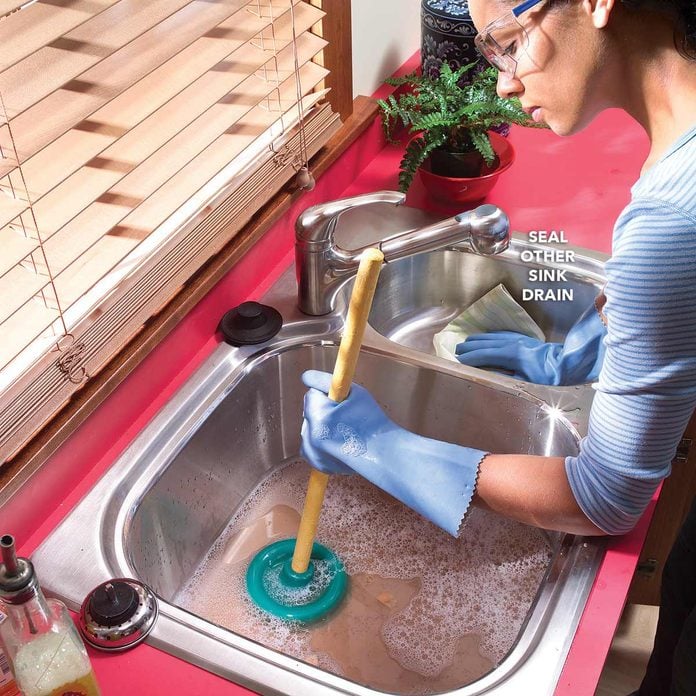
Unclog a kitchen sink drain easily with a plunger. Create a tight seal over the drain opening and push down firmly. Repeat the motion until the blockage clears, ensuring smooth water flow.
Unclogging with a Plunger A kitchen sink drain can easily become clogged due to accumulated food scraps and grease. While it might seem like a minor inconvenience at first, it can quickly turn into a frustrating issue. One of the simplest tools to tackle this problem is a plunger. This handy device can often clear blockages without the need for harsh chemicals or calling a professional. But how do you use it effectively?Proper Plunger Techniques
The key to using a plunger effectively lies in technique. Start by ensuring you have the right type of plunger—one with a flat bottom is ideal for sinks. Before plunging, fill the sink with enough water to cover the rubber part of the plunger. This creates a seal and allows the plunger to work its magic. Position the plunger over the drain and push down firmly. Then, pull up sharply. The combination of pressure and suction helps dislodge stubborn clogs. Repeat this motion several times. Feel free to take breaks between plunges to check if the water is draining.When To Use A Plunger
A plunger should be your first line of defense against minor clogs. If you notice water draining slowly or hear gurgling sounds, it’s time to act. It’s particularly useful for organic blockages like food particles or soap scum. However, if your sink isn’t draining at all, or if there’s standing water, you might need to escalate to more advanced methods. Think about what caused the clog. If you’ve recently had a big meal prep session, chances are a plunger can handle it. But if the issue persists, consider investigating further or consulting a professional. Have you ever tried using a plunger for your kitchen sink? How did it go?Using A Drain Snake
Using a drain snake can be an effective way to tackle those stubborn kitchen sink clogs. It’s a straightforward tool designed to reach deep into your plumbing and dislodge debris that might be causing the blockage. If you’ve ever faced the frustration of a slow draining sink, you’ll know the relief that comes when water flows freely again. Let’s dive into how to master this tool and restore your sink’s functionality.
Choosing The Right Drain Snake
Not all drain snakes are created equal. You’ll find variations in size, flexibility, and length. For kitchen sinks, opt for a medium-sized snake, typically around 15-25 feet long. This length is adequate for most home plumbing systems. Consider the material too; stainless steel snakes are durable and resistant to rust, offering a longer lifespan.
Think about flexibility. A snake that is too rigid might struggle to navigate bends in the pipes, while one that’s overly flexible might not have the strength to push through tough clogs. Find a balance that suits your plumbing setup.
Step-by-step Snaking Process
Start by removing any visible debris from the sink. This ensures the snake focuses on deeper blockages. Ensure your sink is dry to avoid unnecessary splashing as you work. Insert the drain snake slowly, guiding it into the drain opening. Feel for resistance; this indicates you’ve reached the clog.
Rotate the snake gently. This twisting action helps latch onto or break up the clog. As you rotate, apply steady pressure to push through the blockage. Occasionally, retract the snake to check if you’ve captured any debris. Repeat the process as necessary until the water drains smoothly.
Once the clog is cleared, run hot water down the drain to flush out any remaining particles. This step helps prevent future clogs by ensuring the pipes are clean. Remember to clean your drain snake after use to maintain its effectiveness for future tasks.
Have you tried using a drain snake before? If not, what’s holding you back? A little patience and practice can turn you into a home plumbing pro, saving you time and hassle.
Chemical Drain Cleaners
Chemical drain cleaners can efficiently tackle clogs in kitchen sink drains. Pour the cleaner directly into the sink, allowing it to dissolve blockages. Follow the instructions on the product for safe usage.
Chemical drain cleaners can effectively unclog your kitchen sink. These products break down food particles, grease, and debris. They’re convenient and often save time. But, understanding them is crucial. They contain strong chemicals. Proper use ensures safety and efficiency.Types Of Chemical Cleaners
Different types exist for specific clogs. – Caustic Cleaners: They contain lye or caustic potash. These substances turn grease into soap, clearing the blockage. – Oxidizing Cleaners: They use bleach, peroxides, or nitrates. These chemicals release oxygen, breaking down organic material. – Acidic Cleaners: They are powerful, containing sulfuric or hydrochloric acid. They dissolve tough clogs quickly. Choose based on your clog type. Each has unique properties.Safety Precautions
Safety is vital when using these cleaners. Always wear gloves and goggles. Protect your skin and eyes from harsh chemicals. Ventilate the kitchen well. Open windows or use a fan. Avoid mixing different cleaners. This can create harmful fumes. Read the product label carefully. Follow instructions for safe use. Keep cleaners out of children’s reach. Store in a secure place. Use only on the recommended materials. Some products can damage pipes. Check your sink’s compatibility first.Preventive Measures
Regularly clean the kitchen sink drain to prevent clogs. Use a mixture of baking soda and vinegar weekly. This simple method helps maintain smooth water flow.
Preventive Measures Keeping your kitchen sink drain in top condition requires a proactive approach. By taking simple preventive measures, you can avoid clogs and costly repairs. Let’s explore some practical tips that will help you maintain a clear and efficient drain.Regular Maintenance Tips
Regular maintenance is your first line of defense against a clogged kitchen sink drain. Make a habit of running hot water down the drain after each use. This helps to dissolve and wash away any grease or soap residue that might be building up. Consider using a mixture of vinegar and baking soda once a month. Pour half a cup of baking soda followed by half a cup of vinegar down the drain. Let it sit for about 15 minutes, then flush with boiling water. This natural solution is effective in breaking down minor blockages. Installing a drain strainer can also prevent debris from entering the pipes. It catches food particles and prevents them from going down the drain. Empty the strainer regularly to ensure it functions effectively.Avoiding Common Mistakes
Many people unknowingly contribute to their own drainage problems by making simple mistakes. Avoid pouring cooking oil or grease down the sink. Once cooled, these substances solidify and can cause serious blockages over time. Be mindful of what you dispose of in your kitchen sink. Items like coffee grounds, eggshells, and fibrous vegetables such as celery should never be thrown down the drain. They can easily stick together and create stubborn clogs. Using chemical drain cleaners might seem like a quick fix, but they can cause more harm than good. These harsh chemicals can erode your pipes over time. Opt for natural cleaning solutions instead, which are gentler on your plumbing system. What habits can you change today to protect your kitchen sink drain? Taking these preventive measures can save you time, money, and the hassle of dealing with a clogged drain.When To Call A Professional
Persistent clogs or water backups may require a professional’s expertise. Strange odors or slow drainage can signal bigger issues. For complex problems, consider calling a plumber.
When dealing with a clogged kitchen sink drain, DIY methods can help. But some situations need professional intervention. Knowing when to call a plumber saves time and prevents further damage.Signs Of Serious Plumbing Issues
Certain signs indicate serious plumbing issues. Water backing up in other drains is a red flag. This suggests a deeper blockage in your plumbing system. If you hear gurgling sounds from the drain, it may be trapped air. Persistent foul odors can mean a bigger problem. Slow drainage despite cleaning attempts is also concerning. These signs mean it’s time for expert help.Choosing The Right Plumber
Finding the right plumber ensures quality service. Start by asking for recommendations from friends or neighbors. Online reviews provide insight into others’ experiences. Check if the plumber is licensed and insured. This protects you from potential issues. Compare quotes from different plumbers. This helps find a fair price for the service. Make sure the plumber offers a warranty for their work. It shows confidence in their service quality.Frequently Asked Questions
How Do I Drain My Kitchen Sink?
To drain your kitchen sink, remove the drain plug. Clear any debris blocking the drain. Use a plunger to unclog stubborn blockages. Run hot water to flush remaining particles. For persistent clogs, use a drain snake or call a plumber.
Regular maintenance prevents future blockages and ensures smooth drainage.
Do You Use Plumbers Putty On A Kitchen Sink Drain?
Yes, plumbers putty is commonly used to seal kitchen sink drains. It creates a watertight seal, preventing leaks. Ensure the area is clean and dry before applying. This easy-to-use material offers a reliable solution for securing drain fittings effectively. Avoid using it on plastic or stone surfaces.
How To Clear Kitchen Sink Drain Blockage?
Use a plunger to dislodge the blockage. Pour boiling water down the drain to soften debris. Mix baking soda with vinegar, then pour it in. Let it sit for 15 minutes, then flush with hot water. If needed, use a drain snake to remove stubborn clogs.
What Is The Proper Angle For A Sink Drain?
The proper angle for a sink drain is typically 1/4 inch per foot, or about a 2% slope. This ensures efficient water flow, preventing clogs. Adjust the angle slightly as needed, depending on your specific plumbing setup. Proper alignment guarantees optimal drainage and minimizes potential plumbing issues.
Conclusion
Fixing your kitchen sink drain is not difficult. You just need basic tools and patience. Regular cleaning prevents clogs. Always check for leaks after repairs. Use natural cleaners to keep pipes clear. Avoid pouring grease down the drain. It hardens and causes blockages.
Calling a plumber might be needed for complex issues. Regular maintenance saves time and money. Keep your kitchen sink working smoothly. A little effort goes a long way. Now, enjoy your clean and functional kitchen space. Happy plumbing!