How to Organize a Kitchen Drawer: Expert Tips & Tricks
Executive Chef & Lead Commercial Kitchen Specialist at Daily Kitchup Test Lab
Do you find yourself fumbling through a cluttered kitchen drawer, desperately searching for that one elusive spatula or measuring spoon? A chaotic drawer can turn cooking from a joyous activity into a frustrating ordeal.
But imagine opening your kitchen drawer to find everything neatly in its place, where you can easily spot and reach what you need. Sounds like a dream, right? The good news is, it doesn’t have to be. By learning how to organize a kitchen drawer effectively, you can transform your cooking space into a harmonious and efficient environment.
In this guide, you’ll discover simple yet powerful tips to declutter, categorize, and maintain your drawer, making meal prep a breeze and bringing order to your kitchen chaos. Ready to dive in and reclaim your kitchen space? Let’s get started!

Credit: www.reddit.com
Assess Your Drawer Space
Evaluate the contents of your kitchen drawer to maximize space. Identify items you use frequently and those that can be stored elsewhere. This helps in creating an organized and efficient drawer setup.
Assessing your drawer space is the first step in transforming your kitchen into a haven of order and efficiency. Knowing precisely what you have to work with will guide your decisions and ensure you make the most of every inch. Take a moment to open those drawers, examine their contents, and visualize their potential. How often do you find yourself rummaging through clutter to find that elusive spatula or measuring spoon?Measure Your Drawers
Begin by measuring the depth, width, and height of each drawer. These dimensions will help you choose the right organizers. Use a tape measure for accuracy and jot down the measurements. This ensures you don’t buy organizers that won’t fit, or leave you with wasted space.Identify The Purpose
Decide what each drawer will hold. Group similar items together for easier access. Think about how often you use certain utensils or gadgets. Should they be in the top drawer for convenience? Are there rarely-used items taking up prime space?Declutter The Contents
Remove everything from the drawer and lay it out on the counter. Sort items into keep, donate, and discard piles. Do you really need three can openers? Be ruthless and honest. A decluttered space is the foundation for an organized kitchen.Visualize The Layout
Imagine how your ideal drawer would look. Place frequently used items at the front. Arrange utensils in a way that makes sense to you—perhaps by size or function. This visualization will guide your organizing efforts and help you maintain order in the long run.Consider Organizational Tools
Explore options like drawer dividers, baskets, and trays. These tools can make a world of difference in maintaining order. Think about adjustable dividers for flexibility. Do you have a deep drawer that could benefit from stackable trays? By assessing your drawer space effectively, you’re on the path to creating a kitchen that’s not just functional, but a joy to use.
Credit: theranchtable.com
Sort And Declutter
Start by emptying the drawer to assess what you have. Group similar items together to make finding them easier. Use dividers or small containers to keep utensils and tools organized.
Organizing a kitchen drawer can feel like a daunting task. Yet, the key to achieving a tidy and efficient space lies in sorting and decluttering. By focusing on these elements, you’ll transform chaos into order, making your kitchen a more pleasant place to cook and entertain. Imagine opening your drawer to find everything in its place, with no more digging through a jumble of utensils to find that elusive spatula.Categorize Items
Start by emptying the drawer completely. Lay all the items out on a table or countertop. Group similar items together. Think about categories like cooking utensils, baking tools, or cutlery. This will help you understand what you have and how often you use each item. It’s like creating a mini inventory of your kitchen necessities. Do you really need three spatulas when you only use your favorite one? Grouping items will highlight duplicates or items that have seen better days. Keep what you use regularly and love, and set aside the rest.Eliminate Unnecessary Items
Once you’ve categorized, it’s time to eliminate. Look at each group and decide if you really need everything in it. Ask yourself: When was the last time you used that melon baller? If it’s collecting dust, it’s probably time to let it go. Sometimes we hold onto items for the ‘just in case’ moment that never comes. Consider donating utensils that are still in good condition. Someone else might find them useful. Clearing out the excess will make your drawer more functional and less cluttered, giving you a sense of calm and control over your kitchen space.Choose The Right Organizers
Choosing the right organizers for your kitchen drawer is crucial. It transforms chaos into order. With the right tools, you can maximize space. This helps maintain a tidy and functional kitchen.
Drawer Dividers
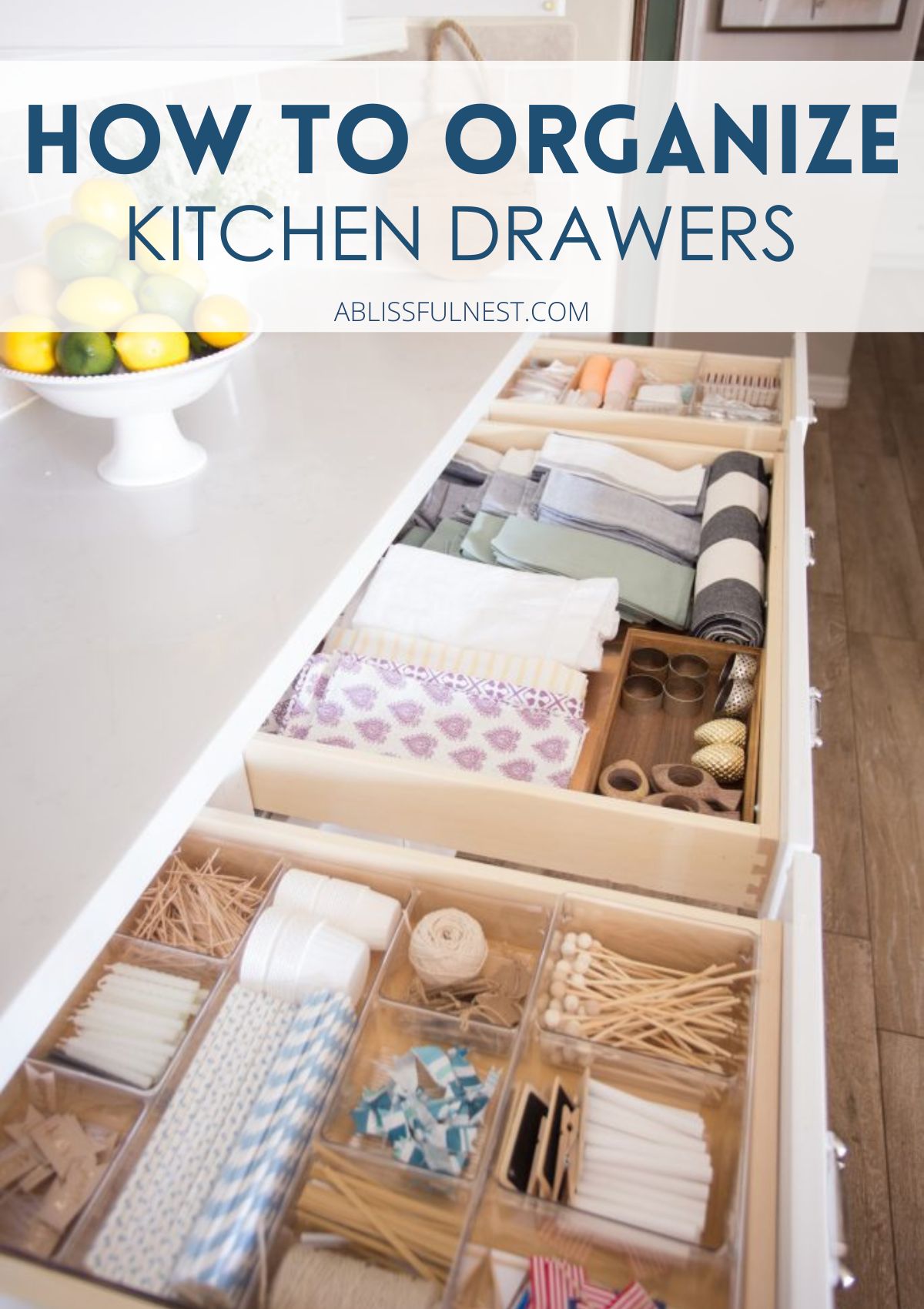
Drawer dividers keep items separated and organized. They prevent utensils from getting mixed up. Choose dividers that fit your drawer dimensions. Adjustable dividers offer flexibility. You can customize them to fit varying drawer sizes.
Utensil Trays
Utensil trays are perfect for cutlery. They have compartments for spoons, forks, and knives. Look for trays with non-slip bottoms. This keeps them in place during drawer movement. Consider bamboo or plastic materials for durability.
Adjustable Inserts
Adjustable inserts offer versatility for different items. They adapt to your needs. You can change their size or shape. They are ideal for awkward-shaped utensils. Look for inserts that are easy to clean and maintain.
Credit: ablissfulnest.com
Arrange For Accessibility
Organizing a kitchen drawer is essential for smooth cooking experiences. Accessibility is key. It ensures that everything is easy to reach. A well-arranged drawer reduces time spent searching for items. Let’s explore ways to arrange for accessibility and make your kitchen work more efficient.
Prioritize Frequently Used Items
Place items you use most often at the front. This includes spatulas, measuring spoons, and peelers. Keep them within easy reach. Avoid burying them under less-used items. This simple arrangement saves time. It makes cooking and cleaning more efficient.
Group Similar Items
Keep similar items together for easy access. Group all your baking tools in one section. Place knives and cutting tools together. This makes it easy to find what you need quickly. It helps maintain order and reduces clutter. Use dividers to separate groups. This keeps each category distinct.
Maximize Vertical Space
Maximize vertical space by using stackable containers and shelf risers. This approach keeps kitchen drawers neat and accessible. Organizing efficiently saves time and reduces clutter.
Maximizing vertical space in your kitchen drawer can transform clutter into order. It’s about using every inch wisely. Vertical space often goes unnoticed but can hold the key to a tidy drawer. By using smart organizing tools, you can make your drawers more efficient.Stackable Organizers
Stackable organizers are perfect for making use of vertical space. They allow you to pile items without creating chaos. These organizers come in various sizes. Choose ones that fit your drawer dimensions. They keep items separated and easy to reach. Use stackable bins for spices or condiments. Stackable trays are great for utensils. Place smaller items on top and larger ones below. This method ensures everything has its place.Tiered Shelving Options
Tiered shelving is another way to maximize vertical space. It adds layers to your drawer, creating more storage areas. Tiered shelves work well for canned goods or jars. They let you see everything at a glance. Install a small, adjustable shelf in deeper drawers. These shelves create levels for different items. They help you utilize the full depth of your drawer.Utilize Labels For Clarity
Utilize labels for clarity by assigning specific names to each drawer section. This helps in quickly finding items and maintaining order. Clear labels guide everyone in the household, making the kitchen more efficient.
Organizing a kitchen drawer can feel like solving a puzzle without a clear picture. You might frequently find yourself searching for that elusive whisk or the missing measuring spoon. Here’s where labels can truly make a difference. By utilizing labels, you bring clarity and order to your kitchen chaos. Not only do they help you quickly identify what’s inside a drawer, but they also encourage everyone in the household to return items to their rightful spots. Let’s dive into how you can harness the power of labels for a more organized kitchen.Choose The Right Type Of Labels
Labels come in various forms, from chalkboard labels to printed stickers. Consider what works best for your kitchen’s aesthetic and functionality. Chalkboard labels offer flexibility since you can easily change the text, while printed labels provide a clean, professional look. Think about the durability as well—waterproof labels might be a smart choice for frequently used items.Label Based On Usage
Organize your drawers by how often you use the items. For example, label one section for ‘Daily Utensils’ and another for ‘Baking Tools’. This way, you streamline your cooking process by having everything in its designated spot. Ask yourself: what do you reach for most often? This simple question can guide your labeling system effectively.Make It Visual
Consider adding small icons alongside the text on your labels. Visual cues can be particularly helpful for children or anyone unfamiliar with your kitchen’s setup. An icon of a fork next to ‘Cutlery’ makes it instantly recognizable. You’ll find this approach not only practical but also fun, adding a creative touch to your kitchen organization.Keep It Consistent
Consistency is key when labeling your kitchen drawers. Use the same font and size for all labels to maintain a uniform appearance. This consistency helps prevent confusion and ensures your kitchen looks tidy and cohesive. Remember, the goal is to make it easy for anyone to navigate your kitchen, even guests.Involve The Family
Involving your family in the labeling process can make the system more effective. When everyone has a say in where items go, they are more likely to follow the system. You might be surprised at the creative ideas your kids or partner come up with for labels. Plus, it’s a great way to teach kids about organization and responsibility. Ultimately, labels are more than just words on a drawer; they are a tool to transform your kitchen into an efficient and enjoyable space. Ready to give it a try? Open that drawer, grab some labels, and start organizing!Maintain Your Organized Drawer
Organize a kitchen drawer by sorting items into groups and using dividers for neat sections. Label each section for easy access and remember to regularly declutter unnecessary items. Keep frequently used tools within reach to maintain an efficient workspace.
Organizing a kitchen drawer can make daily tasks easier. But maintaining that organization requires regular attention. Keeping your drawers tidy involves consistent effort. It’s not just about organizing once, but about keeping it that way. Here are some simple strategies to help maintain your organized drawer.Regular Cleaning
Regular cleaning prevents dirt build-up. Schedule a quick clean every month. Remove all items from the drawer. Wipe the interior with a damp cloth. Dry it thoroughly before replacing items. This keeps the drawer fresh and tidy. A clean drawer is easier to organize and use.Routine Audits
Conduct routine audits to ensure organization. Take everything out and assess each item. Ask yourself if it’s necessary or used often. Remove or relocate items that don’t belong. Group similar items together for easy access. This helps keep the drawer functional and orderly. By following these tips, your kitchen drawer remains a helpful space. Regular cleaning and audits keep it organized and efficient.Frequently Asked Questions
How Do I Start Organizing Kitchen Drawers?
Begin by emptying each drawer and sorting items by category. Decide what you need and discard duplicates. Group similar items together and use dividers or organizers to keep them tidy. Label sections for easy identification. This systematic approach simplifies the organizing process and maximizes drawer space efficiently.
What Items Should I Keep In Kitchen Drawers?
Store frequently used items such as utensils, cooking tools, and gadgets in drawers. Keep them handy for easy access while cooking. Avoid clutter by removing infrequently used or broken items. Organize essentials like dish towels or measuring cups in dedicated sections.
This ensures drawers remain functional and uncluttered.
How Can I Maximize Drawer Space?
Utilize drawer organizers to separate and categorize items effectively. Use adjustable dividers to create custom compartments for different tools. Consider stacking items vertically to save space. Remove unnecessary items to prevent overcrowding. This strategic organization maximizes available space and keeps drawers neat and efficient.
What’s The Best Way To Organize Utensils?
Sort utensils by type and frequency of use. Use a utensil tray or organizer to separate forks, knives, and spoons. Place daily-use items in front for easy access. Store less-used utensils towards the back. This arrangement keeps utensils easily accessible and prevents clutter in your kitchen drawer.
Conclusion
Organizing a kitchen drawer is easier with a plan. Start with clearing out old items. Then group similar utensils together. Use dividers for neat sections. Label if needed. Regular maintenance helps keep it tidy. A clean drawer saves time. Plus, it makes cooking more enjoyable.
Remember to adjust as your needs change. Simple steps lead to a well-organized kitchen. Enjoy the peace of mind that comes with order. Happy organizing!

Similar Posts